- Home
- /Generative Ai Training Course In Delhi
Generative AI Training Course in Delhi, India
6-Month Generative AI Certification Course by Craw Security
In order to assist students and working professionals in gaining practical skills in Python programming, artificial intelligence, large language models (LLMs), prompt engineering, retrieval-augmented generation (RAG), multimodal AI, and agentic AI, Craw Security provides a thorough Generative AI Training Course in Delhi, India.
The six-month program is appropriate for beginners who wish to establish their programming foundation before advancing to more complex AI development. It consists of two months of Python programming and four months of Generative AI instruction.
Contact
+91 9513805401
training@craw.in
Languages
Hindi & English
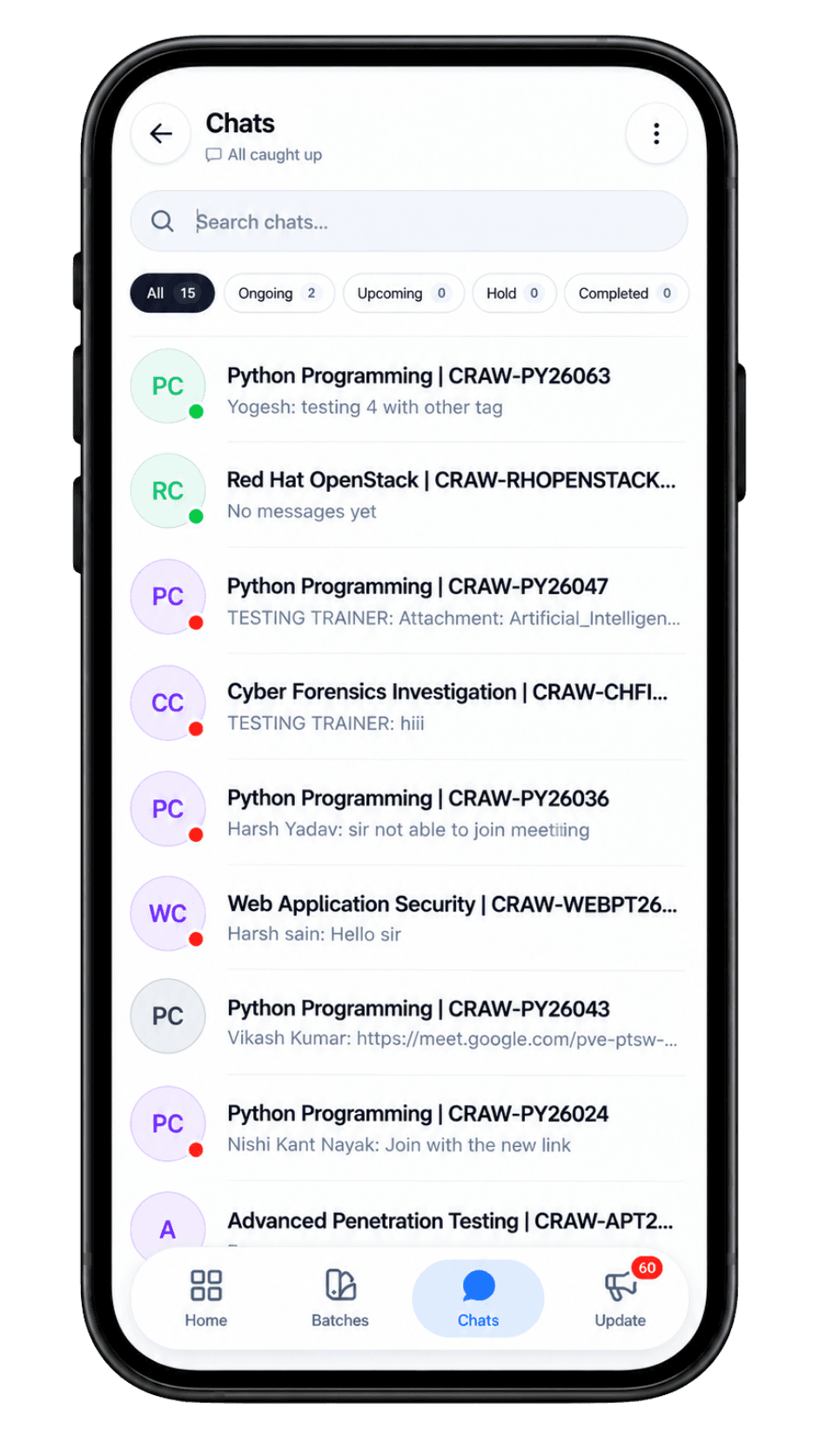
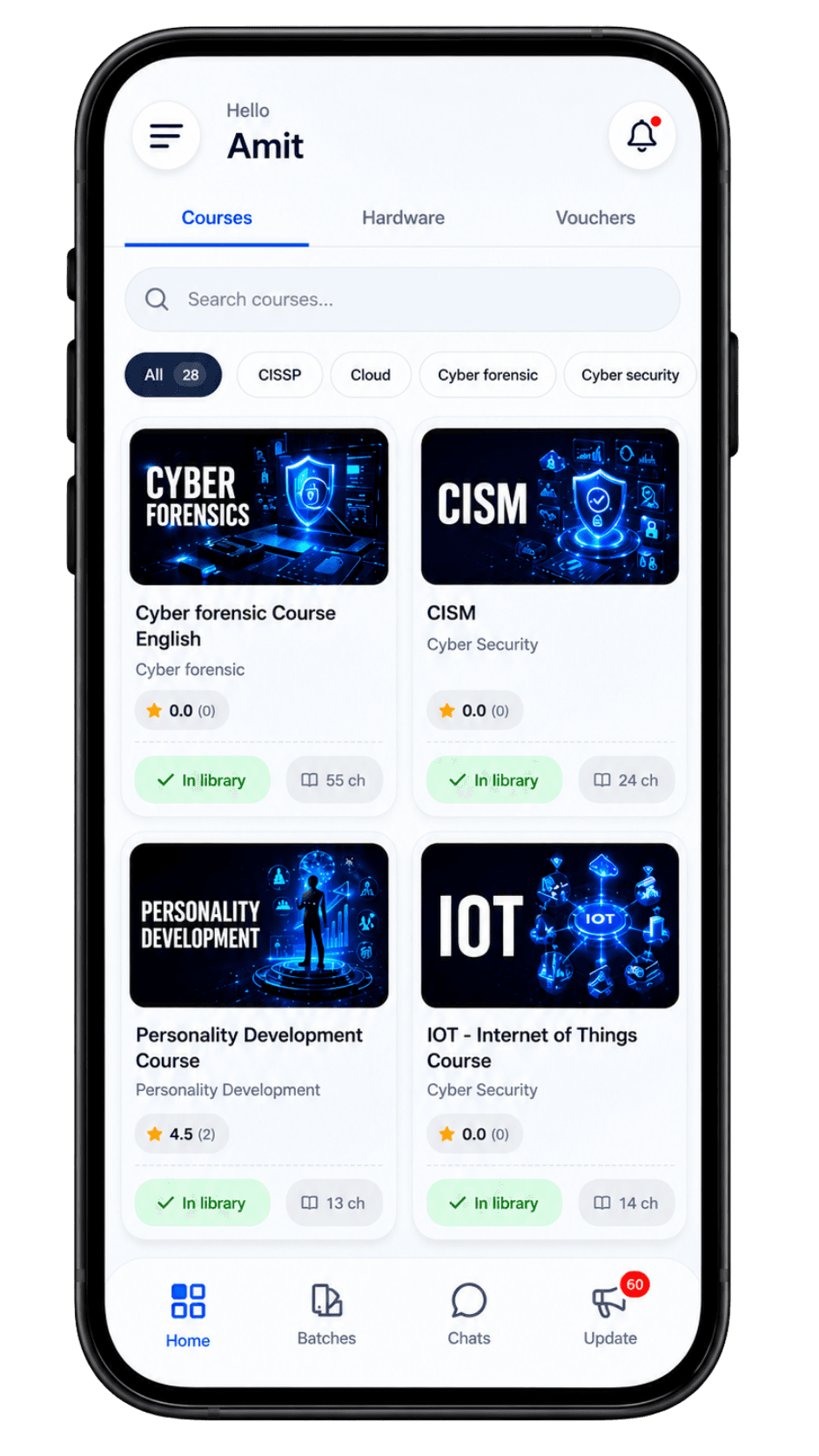
Download Craw Security App for Hassle-Free Usage
Access your cyber security courses, live batch updates, learning progress, course material, and student support in one place. Start learning faster with the official Craw Security mobile application. Through this app, you can perform multiple tasks that can help you understand functionalities treated within the Craw Security premises during on-site classroom and live VILT sessions. Here, you can chat with the support staff, your reputed trainers, and your class members for diverse purposes. Apart from all this, several other benefits are there for you once you start using our app.
.png&w=3840&q=75)
The course includes practical projects, examinations, guided demonstrations, hands-on labs, theoretical topics, and a capstone project. Students advance from programming Python programs to creating secure AI-powered security workflows, AI chatbots, document-based Q&A systems, multimodal search apps, and AI agents.
This program offers a structured learning route from programming fundamentals to sophisticated AI applications, whether you're looking for the Best Generative AI Course, a Generative AI Course with Certificate, or useful Gen AI Training Courses.
Why Learn Generative AI?
Text, photos, code, documents, and other types of digital output can all be produced by machines due to generative AI. Large Language Models (LLMs), vector databases, retrieval systems, multimodal models, and AI agents are increasingly being combined in contemporary AI applications.
Professionals and students can learn how to:
- Work with Large Language Models,
- Create effective AI prompts,
- Develop AI-powered chatbots,
- Build RAG-based document question-answering systems,
- Work with vector databases,
- Generate images using diffusion models,
- Build image and text similarity systems,
- Develop intelligent video search applications,
- Create AI agents using LangChain,
- Implement structured AI outputs using Pydantic,
- Build AI-powered coding agents,
- Work with local AI models using Ollama and llama.cpp,
- Understand AI safety, hallucinations, bias, and data privacy, etc.
These ideas are combined with real-world application and project-based learning in the Craw curriculum.
Generative AI Course Highlights
| Course Feature | Details |
|---|---|
| Course Name | Generative AI Certification Course |
| Training Institute | Craw Security |
| Course Duration | 6 Months |
| Total Training Hours | 384 Hours |
| Total Weeks | 24 Weeks |
| Python Training | 2 Months |
| Generative AI Training | 4 Months |
| Python Curriculum | 8 learning units |
| Generative AI Curriculum | 27 modules across four tracks |
| Projects | 6 projects, including the Python capstone |
| Weekly Learning Hours | 16 Hours |
| Learning Method | Concepts, demonstrations, labs, projects, and assessments |
Course Name
Training Institute
Course Duration
Total Training Hours
Total Weeks
Python Training
Generative AI Training
Python Curriculum
Generative AI Curriculum
Projects
Weekly Learning Hours
Learning Method
The tools and libraries used in the curriculum include Python, PyTorch, Hugging Face Transformers, LangChain, FAISS, Milvus, ChromaDB, Pydantic, Claude API, Ollama, and llama.cpp.
Generative AI Training Course Curriculum
The Generative AI Training Course by Craw Security follows a two-phase learning model.
Phase 1: Python Foundation — Months 1 and 2
Students start from zero when building their programming base throughout the first two months. Python syntax, control flow, data structures, file handling, object-oriented programming, data analysis, APIs, command-line tools, testing, and PyTorch foundations are all covered in the curriculum.
A Python capstone project, a Security Log Analyzer CLI, brings this period to a close.
Phase 2: Generative AI — Months 3 to 6
LLMs, responsible AI, generative AI models, RAG, multimodal applications, Agentic AI, Model Context Protocol (MCP), and safe AI agent development are the main topics of the upcoming four months.
Students finish five more projects, one of which is the flagship SecureAgent SOC Assistant capstone.
Complete Month-Wise Curriculum
| Month | Training Focus | Major Topics and Milestones |
|---|---|---|
| Month 1 | Python Foundation | Core syntax, variables, data types, loops, functions, data structures, files, errors, and packaging |
| Month 2 | Python for Data & AI | OOP, NumPy, Pandas, Matplotlib, REST APIs, CLI tools, testing, PyTorch basics, and Security Log Analyzer project |
| Month 3 | LLM & Prompt Engineering | LLM fundamentals, prompting techniques, CLEAR framework, advanced prompting, AI tools, and local AI models |
| Month 4 | Safety, Generative Models & RAG | Responsible AI, GANs, autoencoders, VAEs, Stable Diffusion, Transformers, chatbot development, and RAG foundations |
| Month 5 | Multimodal & Agentic AI | Practical RAG projects, CLIP, Milvus, video search, AI agents, Agentic AI, Pydantic, and CLI coding agents |
| Month 6 | MCP & Flagship Capstone | MCP architecture, MCP servers, tools, integrations, security testing, SecureAgent SOC Assistant, final exam, and viva |
Month 1
Month 2
Month 3
Month 4
Month 5
Month 6






Phase 1: Python Programming Training
Unit 1: Python Setup and Core Syntax
- Installing Python and configuring the development environment
- Virtual environments and VS Code
- Running Python scripts
- Variables, data types, and operators
- Strings, formatting, input, and output
- Conditional statements and Boolean logic
- Practical lab: Calculator and string utilities
Unit 2: Control Flow and Functions
- For and while loops
- Functions, arguments, and return values
- Scope and lambda functions
- Introduction to recursion
- Built-in functions and importing modules
- Practical lab: Password strength checker
Unit 3: Python Data Structures
- Lists and tuples
- Dictionaries and sets
- Comprehensions and sorting
- Generators
- Collections module
- Stack and queue concepts
- Practical lab: Word-frequency counter and contact manager
Unit 4: Files, Errors and Packaging
- File handling with text and CSV files
- JSON and pathlib
- Exception handling
- Logging fundamentals
- Modules and packages
- pip and requirements management
- Practical lab: Log file parser
- Python Assessment 1
Unit 5: Object-Oriented Python
- Classes and objects
- Inheritance and polymorphism
- Dunder methods and dataclasses
- Type hints and docstrings
- PEP 8 coding standards
- Unit testing fundamentals
- Practical lab: Object-oriented inventory system
Unit 6: Data Analysis with NumPy, Pandas and Matplotlib
- NumPy arrays
- Vectorization and broadcasting
- Pandas DataFrames
- Data cleaning
- Grouping and merging datasets
- Data visualization with Matplotlib
- Practical lab: Dataset analysis and visualization report
Unit 7: Python for APIs, CLI Tools and Testing
- HTTP and REST APIs
- Making API requests
- JSON responses and API keys
- Environment variables and .env files
- Introduction to asynchronous programming
- Command-line tools using argparse
- pytest and testing fundamentals
- Git workflow
- Practical lab: REST API client and tested CLI tool
Unit 8: PyTorch Basics and Python Capstone
- PyTorch tensors and operations
- Autograd
- Basic model training loop
- Project design and review
- Debugging and mentor guidance
- Python final assessment
Project 0: Security Log Analyzer CLI:
Learners build a command-line application for analyzing security logs using Python, Pandas, argparse, and pytest.
Phase 2: Generative AI Training
Module 1: LLM Fundamentals
- Large Language Models
- Tokens and tokenization
- Embeddings and semantic similarity
- Context windows
- Training versus inference
Module 2: Prompt Engineering Basics
- Prompt structure
- Instructions and context
- Input-output mapping
- Good versus bad prompts
- Output quality and prompt clarity
Module 3: Core Prompt Engineering Techniques
- Zero-Shot Prompting
- Few-Shot Prompting
- Role and instruction prompting
- Chain-of-Thought Prompting
- Negative Prompting
- Structured output formatting
Module 4: CLEAR Prompt Design Framework
- Context
- Length
- Examples
- Audience
- Result
- Applying CLEAR to practical AI tasks
Module 5: Advanced Prompt Engineering
- Prompt chaining
- ReAct framework
- Tree of Thoughts
- Self-consistency
- Prompt optimization and debugging
- Context optimization
- Structured outputs
Module 6: Introduction to AI Agents
- AI agents versus basic LLMs
- Agent decision loops
- Memory and tool use
- LangChain workflows
- Introduction to tool-enabled AI applications
Module 7: AI Tools and Ecosystem
- ChatGPT, Claude, and Gemini
- Hugging Face
- Prompt templates
- Vector databases
- ChromaDB and FAISS
- APIs versus local models
Module 8: Local AI Models
- llama.cpp
- Ollama
- GGUF and quantization
- CPU versus GPU inference
- Running models locally
- Offline AI applications
- Local chatbot development
Month 3 project milestone:
Begin building a local LLM chatbot using Ollama, llama.cpp, and prompt templates.
Module 9: AI Safety and Responsible AI
- LLM hallucinations
- Bias auditing
- Data privacy
- GDPR and DPDP considerations
- Prompt injection and jailbreak testing
- Responsible AI practices
Module 10: Generative AI Concepts and Models
- Foundations of Generative AI
- Generative model families
- GANs, VAEs, diffusion models, and autoregressive models
- Applications across text, images, audio, and multimodal AI
Module 11: GANs — Generative Adversarial Networks
- Generator and discriminator architecture
- Adversarial training
- Building a GAN with PyTorch
- Image generation
- StyleGAN and BigGAN
- GAN-based steganography
Module 12: Transformer Architecture
- Input and positional embeddings
- Layer normalization
- Multi-Head Attention
- Feed-forward networks
- Transformer training and inference
- Autoregressive decoding
Module 13: LLM and Chatbot Development
- Gemma 2B
- Model deployment
- vLLM, TGI, and Ollama
- Conversation state and memory
- Chatbot interfaces
Module 14: Retrieval-Augmented Generation (RAG)
- RAG architecture
- Document ingestion
- Embeddings and semantic retrieval
- BGE and MPNet
- FAISS indexing
- Llama-3 integration
- LangChain orchestration
Month 4 project milestone:
Demonstrate the local LLM chatbot and develop document ingestion and retrieval capabilities.
Module 15: Practical RAG Projects
- PDF question-answering systems
- Policy-document chatbots
- LLM and vector database integration
- Enterprise document retrieval patterns
Module 16: Stable Diffusion and Image Generation
- Diffusion model theory
- Forward and reverse diffusion
- Diffusers library
- Text-to-image generation
- Image-to-image generation
- Inpainting
- Classifier-Free Guidance (CFG)
Module 17: Image and Text Similarity Search
- CLIP architecture
- Joint image-text embeddings
- FAISS and Milvus
- COCO dataset
- Vector indexing and similarity search
Module 18: Smart Video Search System
- VILA-2.0 video understanding
- T5 semantic descriptions
- Video embeddings
- Milvus vector storage
- Video indexing and retrieval
- Search evaluation
Module 19: Autoencoders and Variational Autoencoders
- Encoder, bottleneck, and decoder
- Variational Autoencoders
- Latent space and sampling
- MSE and BCE loss functions
- Image denoising
Module 20: Introduction to AI Agents — Recap
- AI agent architecture
- Agent decision loops
- LangChain workflows
- Tool integration
Module 21: Agentic AI Fundamentals
- Planning and memory
- Reflection and tool use
- ReAct architecture
- Plan-and-Execute
- Multi-agent systems
- Sandboxing and tool integration
Module 22: Building Your First AI Agent
- Development environment
- Agent loop design
- LLM and tool integration
- Testing and debugging
- Agent evaluation
Module 23: Structured Outputs with Pydantic
- Structured AI responses
- Pydantic models
- Output validation
- JSON mode and function calling
- Error handling and retry logic
Module 24: Building a CLI Coding Agent
- Command-line coding agent architecture
- File read and write tools
- Bash execution and search
- Python-based agent loop
- Claude API integration
- Output validation and safety guardrails
Month 5 project milestones
- Policy-Document RAG Q&A
- Multimodal and Video Search Engine
- CLI Coding Agent
Module 25: MCP Fundamentals and Architecture
- Model Context Protocol architecture
- JSON-RPC 2.0
- Tools, Resources, Prompts, and Sampling
- MCP versus traditional APIs
- MCP server architecture
Module 26: Building MCP Servers and Tools
- FastMCP with Python
- TypeScript SDK
- MCP resources and prompts
- Sampling
- MCP Inspector
- Connecting MCP servers to Claude
- Server testing and integration
Module 27: MCP Security, Integrations and Capstone
- MCP attack surface
- Tool poisoning
- Trust models
- Sandboxing
- Input validation and sanitization
- Multi-server orchestration
- Packaging and integration
- Secure agent development
Flagship Capstone: SecureAgent SOC Assistant
In order to create an AI-powered security analyst assistant, the final capstone integrates Generative AI, RAG, AI agents, MCP servers, and security guardrails.
Key features:
- Triage security alerts
- Retrieve MITRE ATT&CK and playbook context
- Query sample SIEM or Sysmon logs through MCP servers
- Generate structured incident reports
- Validate output with Pydantic
- Use human approval controls and tool permissions.
- Examine the descriptions of harmful tools and prompt injection.
- Analyze security measures and record mitigations.
Capstone deliverables:
- Git repository with README and setup script
- Architecture diagram
- Packaged MCP server or servers
- Red-team report with before-and-after results
- Recorded or live project demonstration
Project demos, a red-team report, a viva, and a final exam round out the curriculum.
Six Projects Included in the Course
| Project | Description | Main Technologies |
|---|---|---|
| Project 0: Security Log Analyzer CLI | Analyze security logs using a Python command-line application | Python, Pandas, argparse, pytest |
| Project 1: Local LLM Chatbot | Build a chatbot using local AI models | Ollama, llama.cpp, prompt templates |
| Project 2: Policy-Document RAG Q&A | Build a document question-answering system | LangChain, FAISS, Llama-3 |
| Project 3: Multimodal / Video Search Engine | Search visual and video content using AI embeddings | CLIP, Milvus, COCO |
| Project 4: CLI Coding Agent | Build a coding agent with structured outputs | Claude API, Pydantic |
| Project 5: SecureAgent SOC Assistant | Build and security-test an agentic security assistant | AI agent, MCP servers, RAG, guardrails |
Project 0: Security Log Analyzer CLI
Project 1: Local LLM Chatbot
Project 2: Policy-Document RAG Q&A
Project 3: Multimodal / Video Search Engine
Project 4: CLI Coding Agent
Project 5: SecureAgent SOC Assistant
Course Duration and Weekly Schedule
The 24 weeks and 384 training hours in the six-month program are split equally between conceptual study and lab/project work.
| Training Component | Schedule | Hours |
|---|---|---|
| Concept sessions and demonstrations | Monday–Thursday, 2 hours per day | 8 per week |
| Saturday practical lab | 4 hours | 4 per week |
| Sunday project work, assessment and doubt clearing | 4 hours | 4 per week |
| Friday | Optional self-study and mentor support | Not counted |
| Total | 24 weeks | 384 hours |
Concept sessions and demonstrations
Saturday practical lab
Sunday project work, assessment and doubt clearing
Friday
Total
The weekly rhythm is a suggested default that can be changed to fit the batch schedule without affecting the training hours and duration.
Assessments and Evaluation
| Assessment | Week | Coverage |
|---|---|---|
| Python Assessment 1 | Week 4 | Python Units 1–4 |
| Python Final Assessment | Week 8 | Python Units 1–8 and Project 0 |
| Gen AI Assessment 1 | Week 13 | LLM fundamentals, prompting, tools and safety |
| Gen AI Assessment 2 | Week 18 | Generative models, RAG and multimodal search |
| Gen AI Assessment 3 | Week 20 | AI agents, structured outputs and coding agents |
| Final Exam and Viva | Week 24 | Generative AI curriculum and capstone defense |
Python Assessment 1
Python Final Assessment
Gen AI Assessment 1
Gen AI Assessment 2
Gen AI Assessment 3
Final Exam and Viva
Tools & Technologies Covered
A variety of modern AI development tools and libraries are introduced to learners.
| Category | Technologies |
|---|---|
| Programming | Python |
| Deep Learning | PyTorch |
| AI Models | Hugging Face Transformers |
| AI Orchestration | LangChain |
| Vector Search | FAISS, Milvus, ChromaDB |
| Local AI | Ollama, llama.cpp |
| Structured Output | Pydantic |
| AI APIs | Claude API |
| Generative Models | GANs, VAEs, Diffusion Models |
| Multimodal AI | CLIP, VILA-2.0 |
Programming
Deep Learning
AI Models
AI Orchestration
Vector Search
Local AI
Structured Output
AI APIs
Generative Models
Multimodal AI
The tools, libraries, and module content specified in the course curriculum are the sources of the aforementioned technologies.
Who Should Join the Generative AI Course?
This Gen AI Training Course can be suitable for:
- Students interested in Artificial Intelligence
- Python developers
- Software developers
- Data science learners
- Machine learning enthusiasts
- AI professionals
- Cybersecurity professionals
- IT professionals
- Business professionals exploring AI
- Entrepreneurs building AI-powered products
- Professionals looking to understand LLMs and AI Agents
Prior knowledge of artificial intelligence or machine learning is not required for the course. It is advised to be comfortable with Windows or Linux command-line environments and to have a basic understanding of Python programming.
Prerequisites for Generative AI Training
- No prior programming or Artificial Intelligence knowledge is required.
- Python programming is taught from scratch during Months 1 and 2.
- Familiarity with the Windows or Linux command line is helpful.
- A GPU is recommended for selected Generative AI workloads.
- Cloud alternatives are available for suitable practical exercises.
Generative AI Training with Certificate at Craw Security
As part of the professional AI training program, students can get a Generative AI Certification from Craw Security after fulfilling the course prerequisites.
According to the course curriculum, course enrollment, labs, tests, and certificates are all completed through the LMS site.
Learners can demonstrate structured training in areas like these with the aid of a Generative AI Course with Certificate.
Generative AI Course Fees
The chosen training format, batch, length, and current institute offering can all affect the Generative AI Course Fees.
Learners may get in touch with Craw Security for the most recent Generative AI Course Fees in Delhi, as well as information about enrollment, batch availability, and the current fee schedule.
Generative AI Training Courses Online
Learners can look at Generative AI Training Courses Online if they desire flexible learning. Depending on the current batch and distribution options provided by Craw Security, they can obtain AI learning online from their preferred location.
Students, working professionals, and those who are unable to attend traditional classroom sessions can all benefit from online learning.
Craw Security's AI Training Division offers professional AI training for classroom learners.
Why Choose Craw Security for Gen AI Training?
The professional AI curriculum at Craw Security blends fundamental ideas with real-world application in LLMs, generative AI systems, and agentic AI.
The following are important reasons to consider the program:
Comprehensive Curriculum
LLMs, prompt engineering, generative AI models, RAG, image generation, multimodal AI, AI agents, structured outputs, and coding agents are all covered in the course.
Practical Learning
Practical systems including PDF Q&A, policy-document chatbots, picture creation, multimodal search, video search, and AI agents are included in the curriculum.
Modern AI Ecosystem
Python, PyTorch, Hugging Face, LangChain, FAISS, Milvus, ChromaDB, Ollama, Llama.cpp, Pydantic, and the Claude API are among the tools that learners use.
AI + Agentic AI Focus
By presenting AI agents, planning, memory, tool use, multi-agent architectures, and coding agents, the course goes beyond conventional Generative AI notions.
Responsible AI
Hallucinations, bias, data protection, compliance, and ethical AI practices are all included in the curriculum.
Learning Outcomes
After finishing the course, students should be proficient in:
- Designing and evaluating high-quality prompts
- Building RAG pipelines
- Working with document-based AI systems
- Understanding and implementing generative models
- Working with GANs and diffusion models
- Building multimodal search systems
- Using CLIP and vector databases
- Architecting AI agents
- Developing LangChain-based workflows
- Implementing validated outputs with Pydantic
- Building a CLI coding agent
- Understanding AI safety and responsible AI
The learning objectives listed in the Craw curriculum are exactly in line with these results.
Career Applications of Generative AI
Skills in generative AI can be used in a variety of commercial and technology domains, such as:
Career opportunities depend on practical ability, prior experience, portfolio quality, and employer requirements.
Generative AI Certification at Craw Security
Craw Security's Generative AI Certification Course is intended to be a hands-on learning experience that covers contemporary AI technology from foundations to sophisticated applications.
The curriculum exposes students to a number of significant facets of the contemporary AI environment, from comprehending how LLMs function to creating RAG systems, image-generation applications, multimodal search engines, AI agents, and coding agents.
Craw Security's professional AI training program offers a systematic curriculum for studying these technologies, whether you're looking for the Best Generative AI Course, Generative AI Training in Delhi, Gen AI Training, or a Generative AI Course with Certificate.
Enroll in the Generative AI Course by Craw Security
With Craw Security, begin exploring Generative AI, LLMs, Prompt Engineering, RAG, Multimodal AI, and Agentic AI.
Develop practical knowledge, use contemporary AI tools, comprehend real-world AI architectures, and create practical projects that showcase your generative AI abilities.
Take a look at Craw Security's Generative AI Training Course to advance your career as an AI-ready professional.
100% Placement Assistance by Craw Security
Through the dedicated Placement Cell at the Saket branch of Craw Security, an individual is duly liable to seek the 100% Placement Assistance and many other pre-placement and post-placement support offered by it. Apart from it, our placement cell offers multiple valuable services for the eligible and interested individuals, such as the following:
Pre-Placement & Post-Placement Support Services:
- Specialized Personality Development Sessions
- Mock Interview Sessions
- Group Discussion Classes
All in all, learners with a great intention to seek more information on our Placement Cell can click on the highlighted part and check out the other information on it by themselves. Moreover, the same individual can also seek the same details by calling on our hotline mobile number, +91-9513805401, and have an interaction with our superior team of educational counselors with many years of quality expertise in resolving the same category of queries of diverse individuals.
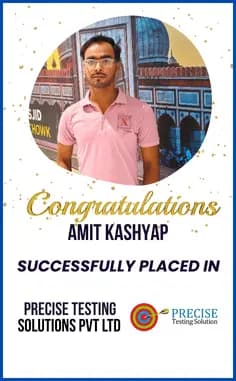
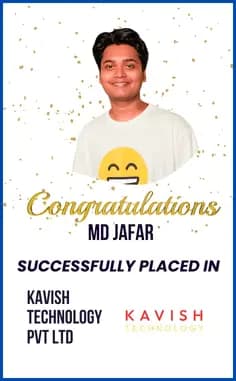
Our Recent Placement Stories
Join our successful alumni network






















What Our Students Say
2500+ Reviews

Ankit Verma
Student
Craw Cyber Security provides excellent training with a strong focus on practical, hands-on learning. I especially appreciated their Red Hat course, wh...

Saket Chaudhary
Student
I recently completed my CEH Practical course and exam from Craw Security, and the experience was truly exceptional. The course was well-structured, co...

Philis Mutamba
Student
Really enjoyed my CEH training with Craw Security. My trainer Robin Paul was patient, clear, and very knowledgeable. The course structure and hands-on...

Kashish Jaiswal
Student
I recently completed my CEH (Certified Ethical Hacker) training at Craw Security, and also took the CEH certification exam. My overall experience was ...

Keshav Gupta
Student
I recently took Linux classes at Craw Security Institute, and it was an excellent learning experience. The course was well-structured, and the practic...

Rishikesh Shahi
Student
Such a great training center . Very supportive faculties and great environment to learn for both working professionals as well as students. Provides d...

Harvinder
Student
I recently completed Craw Security's ethical hacking course and really appreciated their hands-on approach. The instructors are knowledgeable and the ...

Shivam Sharma
Student
I recently completed my CEH V13 certification at Cyber Craw Institute, and it was an outstanding experience. The instructors are experts who simplify ...

Rahul Kumar
Student
I recently completed my AWS cloud training under Amit Sir, and it was a great learning experience. His way of teaching is very clear, practical, and e...

Ritik Rajput
Student
My second webinar in this career got so much knowledge and they answered my question well all good experience thank you

Arjun Patel
Student
I recently passed my EC-Council CEH certification thanks to Craw Security's outstanding training! The instructors were knowledgeable, engaging, and al...

Tushar Meena
Student
Amit Sharma Sir is an exceptional AWS Associate teacher at Craw Saket. His deep knowledge, clear explanations, and practical teaching approach make co...

Vikash Yadav
Student
The experience at Craw Security has been excellent! The learning environment is welcoming, and the staff is supportive and responsive. Even beginners ...

Rohit Sharma
Student
I recently completed CEH practical on craw security. Which was a great decision i made fr they're well organised with proper support and my mentor Rob...
Ankit Verma
Student
Craw Cyber Security provides excellent training with a strong focus on practical, hands-on learning. I especially appreciated their Red Hat course, wh...
Saket Chaudhary
Student
I recently completed my CEH Practical course and exam from Craw Security, and the experience was truly exceptional. The course was well-structured, co...
← Swipe to navigate →
FAQs
About Generative AI Course