🏆 Faculty Achievement · Red Hat

Red Hat
Red Hat Certified Instructor (RHCI)
Sartesh Kumar Sharma
RHCI
Congratulations
Best RHCI
from Partner Fraternity
in GLS, India
We're incredibly proud that Sartesh Kumar Sharma has received the prestigious Best RHCI from Partner Fraternity award at GLS, India — one of only 2 people in the entire country to hold this distinction for CY25.
#1
In India
CY25
Achievement
RHCI
Certified
RHCA
Certified
CRAW Security
Red Hat Partner
The latest batch, starting from:20/09/2026
The latest batch, starting from:20/09/2026
+91 951 380 5401
www.craw.in

⭐ Bestseller🔥 4.7★ Rating
The latest batch, starting from:20/09/2026
(This course is accredited by the Red Hat)
The latest batch, starting from:20/09/2026
🏆 Bestseller
★★★★★4.8 (2500+ reviews)
A container solution for creating and deploying applications is termed Red Hat OpenShift. In addition, it is built on the Kubernetes container orchestration system and offers developers a user-friendly platform.
Moreover, the Redhat OpenShift Training Course is a thorough program that delves deeply into OpenShift's features and functionalities. In addition, this Redhat OpenShift Training Course includes topics like application deployment, security, container orchestration, and monitoring.
Additionally, it offers a Red Hat OpenShift Certification Training via practical learning experience and helps students get ready for the Red Hat OpenShift Certified Operator Certification Exam.
For developers, system administrators, or IT professionals seeking a comprehensive understanding of Red Hat OpenShift Administration Training, this course is excellent.
4.7
Rating
Premium
Course
10K+
Students
📋 Course Details

🏅 Government Certified
FutureSkills Prime Partner (MeitY NASSCOM Initiative)
✅ NASSCOM Accredited
FutureSkills Prime Partner (MeitY NASSCOM Initiative)
✅ NASSCOM Accredited
50,000+
Students Empowered
100%
Career Assistance
70+
Programs Offered
16+
Years of Legacy
200+
VAPT Audits Completed
500+
Students Placed
200+
Hiring Partners

What will you learn in Redhat OpenShift Certification?
The Red Hat OpenShift Training Course is made available to those who wish to show off their expertise while utilizing OpenShift to administer and install container-based applications. A variety of OpenShift-related subjects are covered by the certification program, including:
- Containerization and Kubernetes: A keen knowledge of Kubernetes architecture and container technology.
- OpenShift Installation and Configuration: Setting up and configuring OpenShift, involving networking, storage, and cluster management.
- Application Deployment: Utilizing different deployment methods, like source-to-image (S2I), Kubernetes manifests, and Helm charts, to deploy container-based apps on OpenShift.
- OpenShift Administration: OpenShift cluster administration, covering monitoring, scaling, and troubleshooting.
- OpenShift Security: Putting security mechanisms in place for OpenShift, such as encryption, network controls, and user authentication and permission.
- Application Development: Making use of the OpenShift CLI, source control systems, and integrated development environments to create apps (IDEs).
Choose Craw Security To Obtain Top-Notch Red Hat OpenShift Online Training
Selecting Craw Security for learning and grabbing the best possible training for the Redhat OpenShift Training Course under the guidance of a world-class professional having many years of authentic experience in delivering quality training to all interested learners. Moreover, the learners can also opt for this magnificent Redhat OpenShift Training Course through the online version as well.
Redhat OpenShift Advantages
In the league of providing the best Redhat OpenShift Developer Training, Craw Security provides its international-standard Redhat OpenShift Training Course with the following advantages:
| Scalability | Red Hat OpenShift offers a system for automatically scaling both up and down apps in response to demand. In addition, this assists in keeping expenses lower while making it simpler to meet user demand. |
| Security | Applications are dedicatedly secured and in compliance with industry requirements due to Red Hat OpenShift's integrated security strategy. |
| Automation | Applications may be swiftly spun and maintained without manual interference due to Red Hat OpenShift's automated deployment and management capabilities. |
| Cloud-Native Architecture | Red Hat OpenShift is made to make it possible to develop cloud-native apps, which are intended to benefit from the scalability, dependability, and performance of the cloud. |
| Open Source | Since Red Hat OpenShift is an open-source platform, developers can alter and personalize it to suit their own requirements. |
| Cost Savings | Red Hat OpenShift is intended to be a low-cost alternative for maintaining and delivering applications. Applications can be readily installed and operated at a low cost by utilizing the portability and automation of the cloud. |






Red Hat OpenShift Administration I: Operating a Production Cluster (DO180)
Containerized applications operating as Kubernetes workloads in OpenShift clusters should be deployed, managed, and troubleshooted.
The course "Red Hat OpenShift Administration I: Managing Containers and Kubernetes (DO180)" trains OpenShift cluster administrators in the management of Kubernetes workloads. It also teaches them how to effectively cooperate with developers, DevOps engineers, system administrators, and SREs to ensure the continuous availability of application workloads. This course emphasizes the management of common end-user apps that are frequently available through a web or mobile user interface. These applications typically comprise the majority of cloud-native and containerized workloads. Application management encompasses the deployment and updating of their attachments, like databases, messaging, and systems for authentication.
All versions of OpenShift are supported by the knowledge and abilities gained in this course, like Red Hat OpenShift on AWS (ROSA), Azure Red Hat OpenShift, and OpenShift Container Platform.
This course is based on Red Hat OpenShift 4.18.
Introduction to Kubernetes and OpenShift
Identify the main Kubernetes cluster services and OpenShift platform services, and monitor them from the web console.
Kubernetes and OpenShift Command-Line Interfaces and APIs
Access an OpenShift cluster from the command line, and query its Kubernetes API resources to assess the health of a cluster.
Run Applications as Containers and Pods
Run and troubleshoot containerized applications as unmanaged Kubernetes pods.
Deploy Managed and Networked Applications on Kubernetes
Deploy applications and expose them to network access from inside and outside a Kubernetes cluster.
Manage Storage for Application Configuration and Data
Externalize application configurations in Kubernetes resources, and provision storage volumes for persistent data files.
Configure Applications for Reliability
Configure applications to work with Kubernetes for high availability and resilience.
Manage Application Updates
Manage reproducible application updates and rollbacks of code and configurations.
Course Content Summary (DO180)
- Monitoring and managing OpenShift clusters through the command-line interface as well as through the web console
- The process of deploying apps on OpenShift by using Kubernetes manifests, container images, and templates
- Network connectivity issues between apps running inside and outside of an OpenShift cluster are being investigated and resolved.
- Establishing connections between Kubernetes workloads and storage for application storage
- Increasing the availability and dependability of Kubernetes workloads through settings configuration
- The process of managing updates to an application's Kubernetes manifests, container images, and settings
The Audience for this Course (DO180)
- Primary: Platform Engineers, System Administrators, Cloud Administrators, and other infrastructure-related IT roles who are responsible for tier-1 support of infrastructure for applications that are interested in managing OpenShift clusters and containerized applications.
- Secondary: Enterprise Architects, Site Reliability Engineers, DevOps Engineers, and other application-related IT roles who are responsible for designing infrastructure for applications.
- Developers and Site Reliability Engineers who are new to container technology should enroll in Red Hat OpenShift Development I: Introduction to Containers with Podman (DO188).
- Learners with a great interest in this technology can opt for this magnificent course from Craw Security.
Red Hat OpenShift Prerequisites for this course (DO180)
- For an evaluation of the program's compatibility with your skills, please complete our complimentary assessment test available on the official Red Hat website. Alternatively, for further inquiries in this domain, please contact us at +91-9513805401.
- Proficiency in the methodologies and frameworks employed in the development of web applications.
- Prior experience utilizing a Linux terminal session, executing operating system commands, and comprehending shell scripting is recommended.
Red Hat OpenShift Development I: Introduction to Containers with Podman (DO188)
An introduction for developers to creating and managing containers with Podman for the Red Hat OpenShift Container Platform.
Learners are introduced to developing, executing, and maintaining containers with Podman and Red Hat OpenShift Container Platform in Red Hat OpenShift Development I: Introduction to Containers with Podman (DO188). Through practical application, this course aids individuals in building the fundamental abilities necessary for creating containerized applications.
This course is strictly based on Red Hat® Enterprise Linux® 9, Podman 5 and Red Hat OpenShift® 4.18.
Introduction and overview of containers
Describe how containers facilitate application development.
Podman basics
Manage and run containers with Podman.
Container images
Navigate container registries to find and manage container images.
Custom container images
Build custom container images to containerize applications.
Persisting data
Run database containers with persistence.
Troubleshooting containers
Analyze container logs and configure a remote debugger.
Multi-container applications with compose
Run multi-container applications using Compose.
Container orchestration with Kubernetes and OpenShift
Orchestrate containerized applications with Kubernetes and OpenShift.
Course Content Summary (DO188)
- Introduction to containers
- Run containers with Podman CLI and Podman Desktop
- Build custom container images
- Manage container images
- Remote debugging with containers
- Basic container networking
- Persist data with containers
- Run multi-container applications
- Troubleshoot Container Deployments
- Orchestrate containers with OpenShift and Kubernetes
The Audience for this Redhat OpenShift Training Course (DO188)
- Developers and Site Reliability Engineers who are not familiar with container technologies.
- System administrators and platform operators who are interested in administering OpenShift clusters and containerized applications should enroll in Red Hat OpenShift Administration I: Containers & Kubernetes (DO180). This course is designed to teach them how to accomplish these tasks.
Red Hat OpenShift Prerequisites for this course (DO188)
- To determine if this program is the most incredible fit for your skills, take our free assessment test from the official website of Red Hat, or else call +91-9513805401 to learn more in the same field.
- Some familiarity with the techniques and structures used to build web applications.
- Developers and Site Reliability Engineers who are new to container technology.
- System administrators and platform operators who are interested in managing OpenShift clusters and containerized applications should enroll in Red Hat OpenShift Administration I: Containers & Kubernetes (DO180).
Students also bought
RedHat OpenStack
Red Hat® OpenStack® Platform is basically a cloud computing platform.....Premium60 Hours★★★★

RedHat Rapidtrack RH-199
The RHCSA Rapid Track Course is the combination of two of the most..Premium60 Hours★★★★
RedHat Certified Engineer
RHCE stands for Red Hat Certified Engineer Training in Delhi...Bestseller60 Hours★★★★
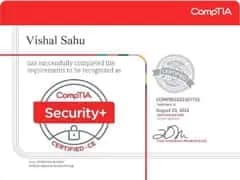
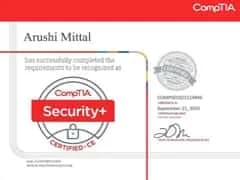
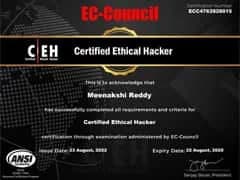
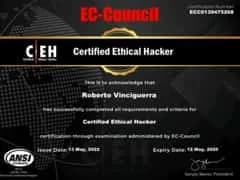
Our Recent Placement Stories
Join our successful alumni network
































Recognition
EC-Council Circle of Excellence




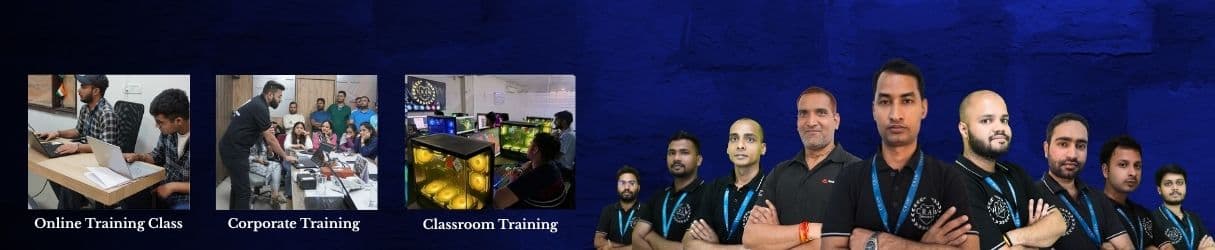
Recognized as Best ATC Partner & CEI for consecutive years
Defence Training
Specialized programs for defense personnel and government agencies

Indian Air Force

Indian Navy

Dept. of Military Affairs

Integrated Defence Staff


Red Hat OpenShift Developer II: Building Kubernetes Applications (DO288)
Develop, construct, and implement containerized applications utilizing Red Hat OpenShift.
Develop, construct, and implement containerized applications utilizing Red Hat OpenShift.
The course "Red Hat OpenShift Developer II: Building Kubernetes Applications (DO288)" provides instruction on the process of designing, constructing, and deploying software applications that are containerized on an OpenShift cluster.
Whether you are transferring preexisting applications or developing container-native applications, you will acquire knowledge on enhancing developer efficiency through the utilization of the Red Hat® OpenShift Container Platform. This platform is designed to manage container deployments and enable enterprises to scale their applications using Kubernetes.
The skills acquired in this course are universally applicable across all iterations of Red Hat OpenShift, encompassing Red Hat OpenShift on AWS (ROSA), Azure Red Hat OpenShift (ARO), and Red Hat OpenShift Container Platform.
This course is built upon the foundation of Red Hat OpenShift 4.18.
Red Hat OpenShift Container Platform for Developers
Define the Red Hat OpenShift architecture, concepts, and terminology, and set up the developer environment.
Deploying Simple Applications
Deploy simple applications by using the Red Hat OpenShift web console and command-line tools.
Building and Publishing Container Images
Build, deploy, and manage the lifecycle of container images by using a container registry.
Managing Red Hat OpenShift Builds
Describe the Red Hat OpenShift build process and build container images.
Managing Red Hat OpenShift Deployments
Describe the different Red Hat OpenShift deployment strategies and how to monitor the health of applications.
Deploying Multi-container Applications
Deploy multi-container applications by using Red Hat OpenShift templates, Helm charts, and Kustomize.
Continuous Deployment by using Red Hat OpenShift Pipelines
Implement CI/CD workflows by using Red Hat OpenShift Pipelines.
Course Content Summary
- Functionalities available to developers in the Red Hat OpenShift web console.
- Creating and distributing container images for Red Hat OpenShift.
- Overseeing the implementation of container deployments on the Red Hat OpenShift platform.
- Develop and implement multi-container applications on the Red Hat OpenShift platform.
- Utilize Helm Charts and Kustomize to implement multi-container applications.
- Establish health assessments to oversee and enhance the dependability of the application.
- Developing CI/CD workflows utilizing Red Hat OpenShift Pipelines.
The Audience for this Redhat OpenShift Training Course
- Software architects
- Developers specializing in creating software applications for large organizations.
- Site reliability engineers specializing in DevOps.
Enthusiastic individuals with a strong inclination towards this technology have the option to choose this exceptional course offered by Craw Security.
Red Hat OpenShift Prerequisites for this course (DO288)
- To ascertain the degree to which the program aligns with your skill set, kindly finish our favorable assessment test that can be accessed through the official Red Hat website. Further inquiries regarding this subject may be directed to us at +91-9513805401.
- Expertise with the frameworks and methodologies utilized in the construction of web applications.
- It is advisable to have previous expertise working with a Linux terminal session, understanding shell scripting, and performing operating system commands.
Red Hat OpenShift Administration II: Operating a Production Kubernetes Cluster (DO280)
OpenShift clusters and containerized apps configuration, management, and troubleshooting.
Configuring, troubleshooting, and managing the Red Hat OpenShift Container Platform are covered in Red Hat OpenShift Administration II: Operating a Production Kubernetes Cluster (DO280). This practical, lab-based course teaches you how to check that a cluster was successfully installed, administer it regularly, and troubleshoot the deployment of containerized applications.
The knowledge and abilities that you acquire via the completion of this course are applicable to all versions of OpenShift, such as Red Hat OpenShift on Amazon Web Services (ROSA), Azure Red Hat OpenShift, and OpenShift Container Platform.
This course is based on OpenShift Container Platform 4.18.
Declarative Resource Management
Deploy and update applications from resource manifests that are parameterized for different target environments.
Deploy Packaged Applications
Deploy and update applications from resource manifests that are packaged for sharing and distribution.
Authentication and Authorization
Configure authentication with the HTPasswd identity provider and assign roles to users and groups.
Network Security
Protect network traffic between applications inside and outside the cluster.
Expose non-HTTP/SNI Applications
Expose applications to external access without using an Ingress controller.
Enable Developer Self-Service
Configure clusters for safe self-service by developers from multiple teams and disallow self-service if projects have to be provisioned by the operations staff.
Manage Kubernetes Operators
Install and update Operators that are managed by the Operator Lifecycle Manager and by the Cluster Version Operator.
Application Security
Run applications that require elevated or special privileges from the host Operating System or Kubernetes.
OpenShift Updates
Update an OpenShift cluster and minimize disruption to deployed applications.
Course Content Summary (DO280)
- Deploying packaged applications using manifests, templates, kustomize, and helm.
- Configuring authentication and authorization for users and applications.
- Protecting network traffic with network policies and exposing applications with proper network access.
- Deploying and managing applications using resources manifests.
- Enabling developer self-service of application projects.
- Managing OpenShift cluster updates and Kubernetes operator updates.
The Audience for this Course (DO280)
- Individuals who are responsible for the management and maintenance of infrastructure for applications, including Platform Administrators, System Administrators, Cloud Administrators, and other infrastructure-related IT responsibilities.
- Enterprise Architects, Site Reliability Engineers, DevOps Engineers, and other application-related IT positions that are accountable for creating infrastructure for applications are included in this category.
Red Hat OpenShift Prerequisites for this course (DO280)
- The ability to demonstrate similar Red Hat Enterprise Linux system management expertise or become a Red Hat Certified System Administrator.
- Finish Red Hat OpenShift I: Containers & Kubernetes (DO180) or exhibit equal familiarity with the fundamentals of containers, Kubernetes, and OpenShift.
- To determine if this program is the best fit for your skills, take our free assessment.
Student Reviews

Saket Chaudhary
New2 weeks ago
I recently completed my CEH Practical course and exam from Craw Security, and the experience was truly exceptional. The course was well-structured, covering all essential aspects with hands-on practical training. The mentors were incredibly supportive throughout the journey, especially my instructor, Mohit Kumar Sir, whose guidance and expertise played a crucial role in my learning process. His dedication and willingness to help made the course even more valuable. I highly recommend Craw Security to anyone looking to enhance their cybersecurity skills. A well-deserved 5 out of 5 stars 🤩

Philis Mutamba
1 month ago
Really enjoyed my CEH training with Craw Security. My trainer Robin Paul was patient, clear, and very knowledgeable. The course structure and hands-on sessions were really really helpful.

Kashish Jaiswal
3 weeks ago
I recently completed my CEH (Certified Ethical Hacker) training at Craw Security, and also took the CEH certification exam. My overall experience was highly positive. The training was well-structured and delivered by experienced instructors (Mohit Sir) who had in-depth knowledge of ethical hacking concepts. The course covered a wide range of topics, They were patient in clearing doubts and ensured that all students, regardless of their prior experience, could grasp the topics effectively. The institute provided excellent guidance on exam preparation, including practice tests, study materials, and exam-taking strategies. Their support team was also helpful in scheduling the exam and addressing any queries related to certification. I highly recommend Craw Security to anyone looking for any Security related training’s. Would definitely consider returning for more advanced cybersecurity courses in the future!

Keshav gupta
3 weeks ago
I recently took Linux classes at Craw Security Institute, and it was an excellent learning experience. The course was well-structured, and the practical knowledge I gained has been invaluable. A special thanks to Anand Sir for his dedication

Tushar Meena
3 weeks ago
Amit Sharma Sir is an exceptional AWS Associate teacher at Craw Saket. His deep knowledge, clear explanations, and practical teaching approach make complex topics easy to understand. He's always supportive and ready to clear doubts. Truly appreciate his dedication and teaching style — highly recommended for anyone looking to learn AWS the right way!

Vikash Yadav
3 weeks ago
The experience at Craw Security has been excellent! The learning environment is welcoming, and the staff is supportive and responsive. Even beginners feel well-guided throughout the program. It's a supportive place to build a strong foundation in cybersecurity.

Rohit Sharma
3 weeks ago
I recently completed CEH practical on craw security. Which was a great decision i made fr they're well organised with proper support and my mentor Robin paul who guided me throughout i personally thank him here..

Ankit Verma
3 weeks ago
Craw Cyber Security provides excellent training with a strong focus on practical, hands-on learning. I especially appreciated their Red Hat course, which was well-structured and aligned with real exam scenarios. The instructors are highly knowledgeable, and the staff is very supportive and friendly, always ready to assist. It's a great place to start or grow your career in cybersecurity and Linux administration.

Amit Kashyap
3 weeks ago
I had a great experience with CRAW Security! The cybersecurity training was practical and industry-relevant. The trainers were very supportive throughout. Special thanks to Mansi Ma'am from the placement cell for her constant support and guidance — because of her help, I got successfully placed. Highly recommend this institute!

Yashika singhaniya
3 weeks ago
Grateful to Craw Security for an excellent learning experience in cybersecurity. A big thank you to Sahil Sir and Bhumika Ma’am for their mentorship, support, and encouragement during my learning process.

Charan Kumar reddy Yandapalli
3 weeks ago
I am very happy to participated as a member of CRAW security. This company is very Good at atmosphere and very good for learning also. I'm strongly recommending Craw security to your cyber security future 👍
Our Students Have Been Hired By